.svg)
Supporting Your Loved One: A Comprehensive Guide to Autism, Sensory Needs, and the Power of In-Home ABA
Navigating the Autism Journey with Clarity
Receiving an autism diagnosis is a milestone that transforms a family’s perspective, moving the focus from a search for answers to a strategic plan for support. As a clinician, I want to validate that this journey is rarely linear, yet it is deeply purposeful. Moving from a clinical diagnosis to a functional, home-based support plan is about more than logistics; it is about honoring the individual’s unique way of being in the world. Autism Spectrum Disorder (ASD), as defined by the DSM-5, is characterized by a "high degree of individual variability." It is a true "spectrum," where no two individuals share the same developmental profile.
The diagnostic process is fundamentally a collaborative partnership between a professional’s clinical observation and the parent’s intimate knowledge of their child's history. This collaboration is the first step in leveraging peak brain plasticity. We do not seek a "cure," but rather a way to provide support during these critical early years to improve long-term developmental outcomes. By understanding the clinical definition, we can begin to identify the specific, observable behaviors that will guide a compassionate and effective support plan.
2. Recognizing the Signs: Beyond the Diagnosis
Identifying specific behavioral markers is a powerful form of advocacy. When families understand these signs, they can push for therapeutic support that is precise rather than generic. A nuanced diagnosis respects the child’s individuality and prevents the "one-size-fits-all" approach that can lead to frustration for both the child and the caregiver.
Caregivers are often the first to notice markers identified in the M-CHAT-R/F (Modified Checklist for Autism in Toddlers, Revised). These observable behaviors are typically categorized as follows:
Social-Communication
- Response to Name: Not looking up, talking, or stopping an activity when called.
- Eye Contact: A lack of sustained eye contact when playing, being dressed, or during conversation.
- Joint Attention and Pointing: Not pointing with one finger to show something interesting, such as an airplane in the sky or a big truck on the road.
- Social Sharing: Not bringing a toy or flower to a caregiver just to share the interest, rather than to ask for help.
Developmental Play
- Pretend Play: An absence of make-believe actions, such as pretending to drink from an empty cup or pretending to feed a doll or stuffed animal.
- Repetitive Movements: Making unusual finger movements near the eyes, such as wiggling fingers close to the face.
- Imitation: Difficulty copying simple social actions like waving "bye-bye" or clapping.
These behavioral markers are often the outward expression of how a child’s nervous system processes the world. To support the child effectively, we must look deeper into their sensory experiences.
3. Understanding Overstimulation: Navigating the Sensory World
Managing sensory needs is strategically vital for emotional regulation and a child’s readiness to learn. When a child’s environment is a source of distress, what appears to be "non-compliance" is almost always a physiological response to sensory input. In my practice, I emphasize that behavior is communication; we must listen to what the child’s body is telling us.
Sensory processing differences generally fall into two categories:
- Sensory Avoidance (Overload): This includes auditory sensitivities, where a child is visibly upset by everyday noises like vacuum cleaners or loud music. It can also manifest in traditional clinic settings where unfamiliar lights and sounds create a "flight or fight" response.
- Sensory Seeking (Vestibular/Movement): Many children have unique vestibular needs. This might involve a deep love for being swung or bounced on a knee, or "seeking" behaviors like constant jumping or spinning. This is a functional need for movement that helps the child regulate their body.
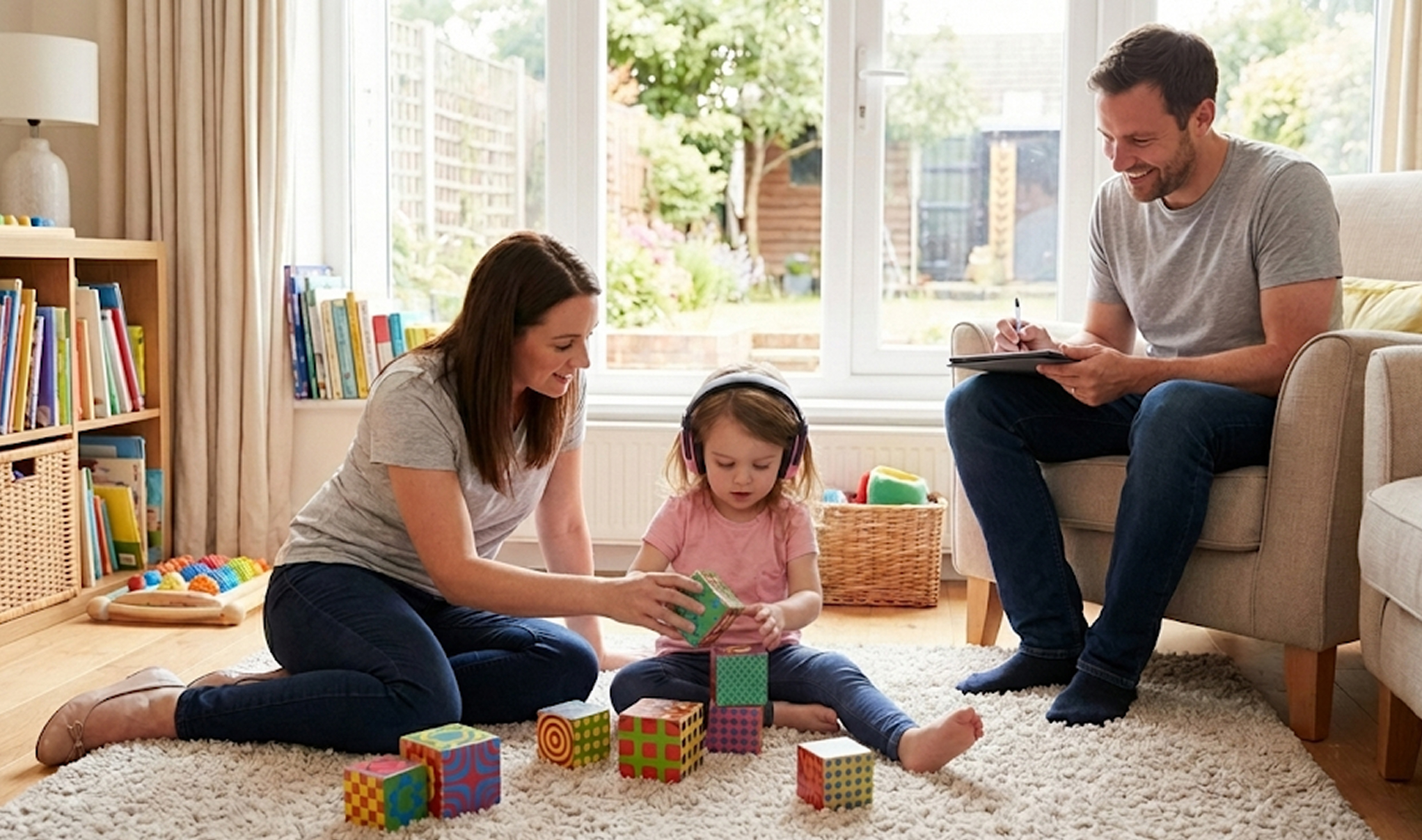
By transitioning therapy into the home, we can mitigate sensory hurdles. We can control the auditory environment and utilize the child’s own equipment—like their favorite swing—to meet their vestibular needs, ensuring they remain in a state of "regulated calm" that is necessary for growth.
4. Modern ABA: A Framework for Growth and Autonomy
Applied Behavior Analysis (ABA) has evolved into a neurodiversity-affirming science of learning and motivation. Modern ABA moves away from rote compliance and toward fostering functional communication, dignity, and autonomy. Our goals are co-created with the family to support the individual’s existing strengths rather than simply addressing "deficits."
Key elements of this modern framework include:
- Positive Reinforcement: Using highly individualized rewards—such as access to a favorite book or specific praise—to encourage skills that improve the child's quality of life.
- Clinical Significance for All: Research indicates that even children with the lowest baseline adaptive levels experience clinically significant gains over time.
- Intervention Intensity: Meaningful progress is most often associated with 12 to 24 months of consistent prescribed therapy hours. This duration allows for the stabilization of skills and long-term adaptive growth.
While ABA has historical controversies, today’s data-driven practice is rooted in ethics. We use data to ensure that therapy is actually working for the child. If the data doesn't show an improvement in the child's happiness and ability to communicate, we change our approach. The focus is always on "meaningful functional change" that respects the child’s unique personality.
5. The In-Home Advantage: Why Learning at Home Works
The home is the most strategic setting for skill acquisition because it is the "natural laboratory" where life actually happens. This environment naturally facilitates Natural Environment Teaching (NET) and creates a seamless bridge between therapy and daily life.
The benefits of the in-home model include:
- The Comfort Factor: Reducing the anxiety of a clinical setting allows the child to focus on social and communication goals.
- Natural Teaching Moments: Routines like brushing teeth, snack time, or playing with siblings are utilized as organic learning opportunities.
- Generalization (The "Kitchen Counter" Effect): Learning to request a snack at the kitchen counter, where the behavior will actually be used, ensures the skill sticks. This eliminates the struggle of transferring a skill from a clinic to the home.
- Reducing Discontinuation: Traditional clinic models often have high "discontinuation" rates due to the "travel model" of care. In-home therapy removes logistical and travel barriers, which is especially critical for single-parent households or busy families who might otherwise have to stop services.
6. Empowering the Family: Resources and Advocacy
A child’s success is deeply linked to the support provided to their caregivers. In our framework, the parent is a "collaborative partner." When you are empowered with tools and community, your child’s intervention is more sustainable and effective.
Ready to Take the Next Step?
Understanding your child’s unique developmental path is the first step toward unlocking their full potential. Skill Builders ABA offers widely recognized screening tools and evaluations to help you identify your child's strengths and needs.
Select the Assessment That Fits Your Child:
- ADOS-2 (All Ages): Recognized globally as the "gold standard" for autism diagnosis, this is a comprehensive, play-based evaluation used to accurately assess communication, social interaction, and play in individuals of all ages.
- The CAST (Ages 4–11): The Childhood Autism Spectrum Test is a parent-report questionnaire designed to identify social and communication patterns in school-aged children, focusing on peer relationships and conversation skills.
- The M-CHAT-R (Ages 16–30 Months): The Modified Checklist for Autism in Toddlers is a quick, 20-question screener designed to identify early risks by looking at how your toddler engages socially and responds to the world around them.
Your Roadmap to Support:
- Complete the Screening: Visit the Skill Builders ABA website and select the tool appropriate for your child's age to provide a snapshot of their development.
- Review the Results: Our specialists will analyze your responses to highlight specific areas of strength and concern. For tools like the CAST, we generate a report to help translate this data into a clear summary of findings.
- Start Your Journey: Contact Skill Builders ABA to discuss your results. Whether you need a full diagnostic evaluation or are ready to build a personalized care plan involving ABA, speech, or occupational therapy, we can help you navigate the path forward.
Still have questions?
You don't have to guess. Our free screening tools take 5 minutes and give you immediate feedback. Start your screening now.