.svg)
Is At-Home ABA Therapy More Effective Than Clinic-Based ABA?
Child-led ABA practices to thrive
Introduction: Clearing Up the Clinic vs. Home Confusion
Choosing the right therapy environment for your child with Autism can feel like navigating a maze. Clinic-based? Home-based? The options, opinions, and information can be overwhelming. But what if the choice isn't just about logistics and convenience? What if it's about choosing the ideal setting for the most modern, ethical, and child-led ABA practices to thrive?
The field of Applied Behavior Analysis (ABA) has evolved significantly. Today's best practices look very different from the rigid methods of the past, focusing on play, natural environments, and family collaboration. This article will reveal five surprising truths that reframe the conversation: at-home ABA is not just a convenient alternative; it is the natural environment where the most effective and respectful forms of therapy are designed to flourish.
1. Learning in the "Real World" Isn't Just a Bonus—It's the Goal
The ultimate measure of success in any therapy is generalization—the ability to use a skill in different settings, with different people, and at different times. After all, a skill is only truly learned if it can be used in real life.
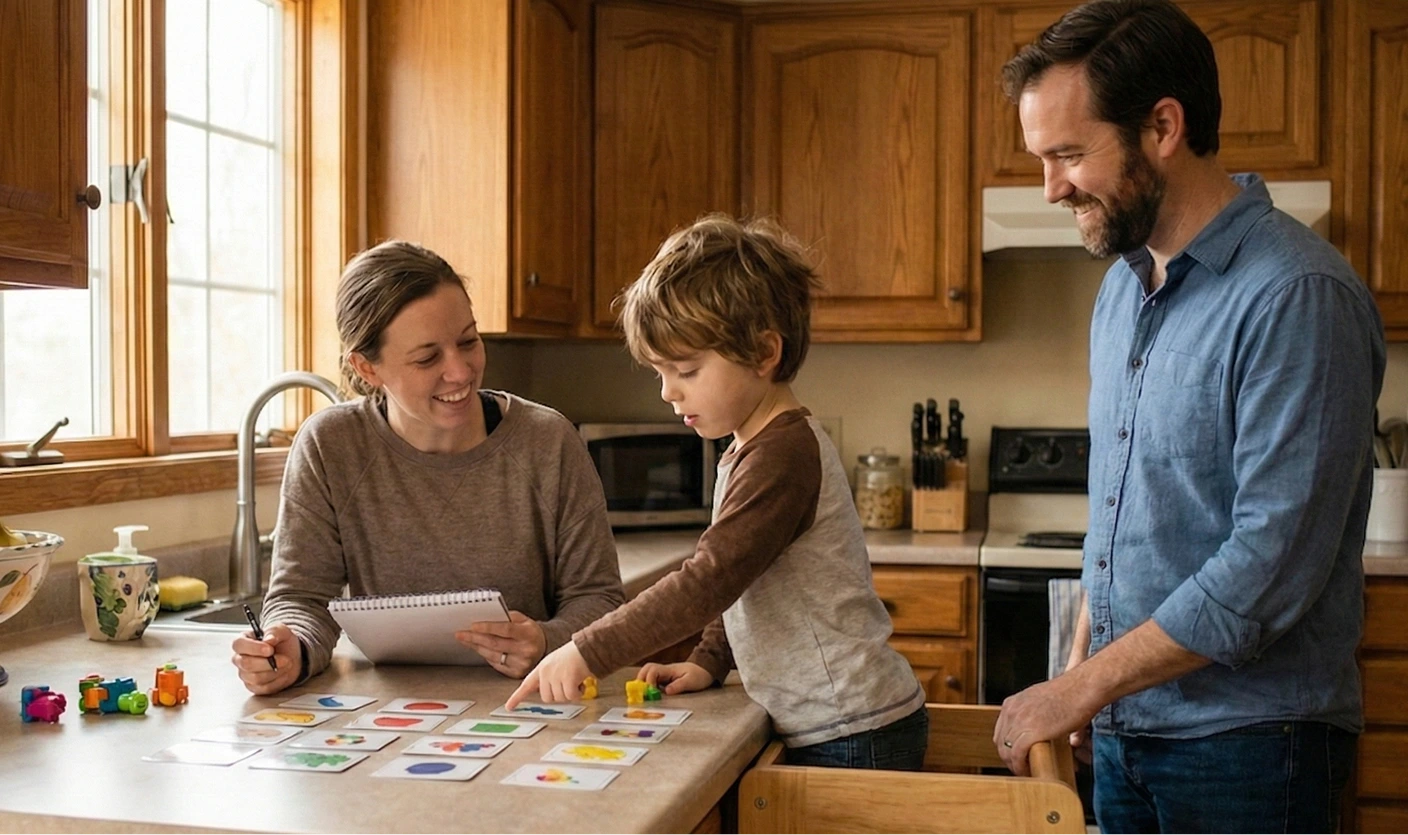
This is where the home environment provides a foundational advantage through Natural Environment Teaching (NET). In this approach, skills are taught within the context of daily life, like learning to take turns during a family board game or practicing communication while preparing a snack. While skills learned in a clinic must be deliberately and painstakingly re-taught for the real world, skills learned at home are functional from the very first session.
This distinction is critical. According to expert standards, a provider who exclusively uses highly controlled methods fails to adequately address generalization. In a clinic, generalization is a separate, deliberate step that must be programmed, whereas in the home, it's the foundation of the entire process.
2. It Can Turn Overwhelmed Parents into Confident Co-Therapists
Many parents feel like they are on the sidelines of their child's therapy, observing sessions but unsure how to carry the strategies over into daily life. Modern, home-based ABA models completely reframe this role, transforming parents from passive observers into empowered collaborators.
Developmental models like the Early Start Denver Model (ESDM) have a central goal of training parents to be "co-therapists." This doesn't mean you need to become a certified analyst; it means a quality provider works with your whole family, equipping you to weave therapeutic strategies into your everyday routines. This approach is supported by broader findings from organizations like the Autism Society, which notes that "ABA was most effective for an individual when ABA providers worked alongside family members." By empowering you, at-home therapy ensures that progress continues long after the therapist has left for the day.
“Our BCBA was incredible and ensured that therapy was done in a natural environment that was inclusive of our family.”
3. Therapy Can Happen in a Place of Comfort and Joy
A common and valid concern about ABA stems from its history, where some methods were rigid or focused on compliance. Modern, high-quality ABA directly addresses these ethical critiques, and the home setting is the perfect environment for this evolution to take shape. The familiar space, with a child's own toys and routines, naturally reduces anxiety and creates a secure space for learning.
More importantly, it is the ideal setting for child-led, play-based approaches like Pivotal Response Treatment (PRT). Rather than forcing compliance, PRT leverages a child’s intrinsic interests to build motivation and create positive, joyful interactions. This approach is the field's answer to historical concerns about neuronormativity—the outdated goal of making a child appear "less Autistic" by forcing eye contact or extinguishing harmless self-regulatory movements ("stimming"). Therapy that meets a child where they are—both physically and emotionally—is ethical, respectful, and ultimately, more effective.
4. The Therapy Plan Is Naturally Customized to Your Family's Life
Because home-based therapy takes place in your unique environment, the treatment plan is inherently and deeply personalized. A quality provider won't hand you a generic program. Instead, they will adapt intervention strategies to align with your family's specific routines, values, and even cultural traditions.
This means that instead of practicing mealtime skills in a sterile clinic kitchen, your child learns those skills in your kitchen, using your utensils, during your family's actual dinner routine. The therapy plan is built around the realities of your life, not the other way around. This ensures the goals are more meaningful, the progress is more functional, and the skills being taught directly improve your family's quality of life.
5. It Solves One of the Biggest Hurdles to Success: Simply Showing Up
Here is a surprising but critical truth: one of the biggest reasons families don't see the full benefits of ABA is due to high rates of therapy discontinuation and low session frequency. Logistical hurdles like transportation and complex scheduling are significant factors that wear families down.
This matters because major health organizations like the National Research Council recommend a minimum of 25 hours per week for therapy to be effective—a target that is nearly impossible to meet when facing daily travel and scheduling barriers. At-home therapy directly solves these practical hurdles. By bringing the therapist to you, it removes the logistical strain and makes it more feasible for families to maintain the consistency and intensity proven to drive meaningful, lasting change.
The best therapy plan is one you can actually stick with.
A Final Thought for Your Family's Journey
Choosing a therapy path is a deeply personal decision, but understanding the unique power of the home environment is key. By integrating therapy into the very fabric of your family’s daily life, you do more than teach isolated skills. You create an ecosystem of learning and support that fosters true independence, functional communication, and lasting growth for your child.
How might learning and growing in the most meaningful environment—your own home—shape the strongest, most resilient long-term outcomes for your child?
Clarity for Families Starting Their Journey
Understanding where to begin can feel overwhelming, but you don’t have to figure it out alone. You can learn more about our approach on our site, or if you'd rather talk it through with a coordinator, feel free to get in touch.